
Physics-informed models for engineering simulation
Real-time predictions from the simulations you already have.
Invariant Physics turns tens of COMSOL or Ansys runs into a model that answers the next design question in milliseconds, and tells you how far to trust the answer.
9 training runs38 ms per new caseRuns on a laptop CPU
The problem
Every new design question can mean another simulation.
Change the load, the flow rate or the material, and engineers often run the solver again. A single run can take hours; a study can need hundreds.
Most teams have tens of runs per question, not thousands, and they are rarely tidy: different meshes, settings and units across projects.
The runs are design IP, often under customer NDA or export control. Training on a vendor's cloud means uploading them.
And an engineer has to sign off on the number, so a prediction without a tested error isn't much use.
How it works
Learn more from fewer runs, and test every answer.
Neural surrogates work well when you have hundreds of runs and GPUs. Invariant Physics is built for the tens of runs most teams actually have.
Import the runs you have
COMSOL or Ansys exports, experiments, parameter sweeps, or CSV and Excel tables. Each run stays on its own mesh.
Find the physics they share
It reads the units, builds the dimensionless groups, and looks for scaling, symmetries and relationships between fields.
Test before you trust
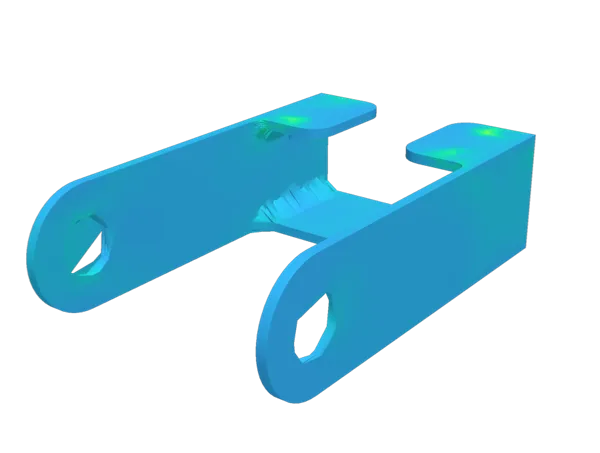
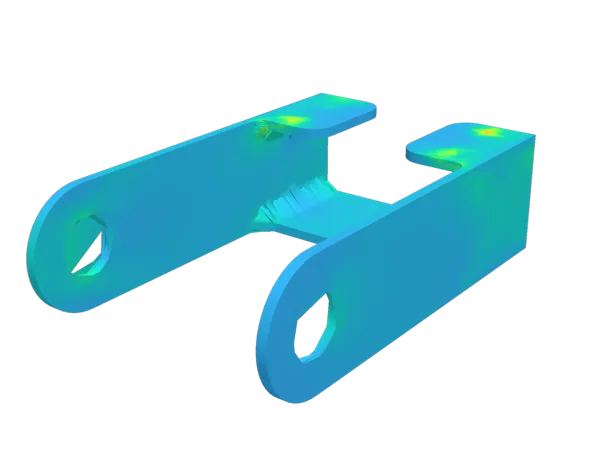
It holds back runs, predicts them, and reports the error field by field. Cases outside the tested range are flagged.
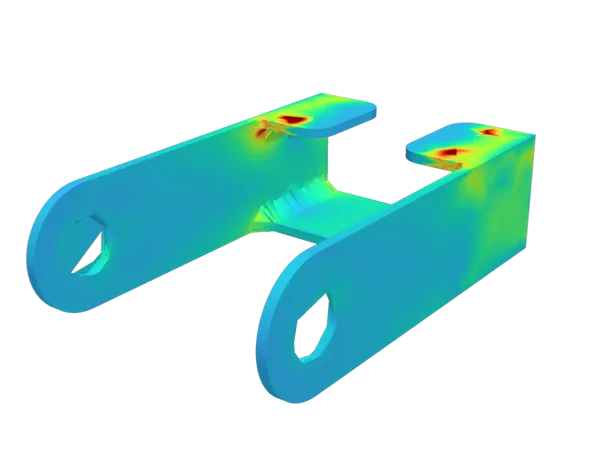
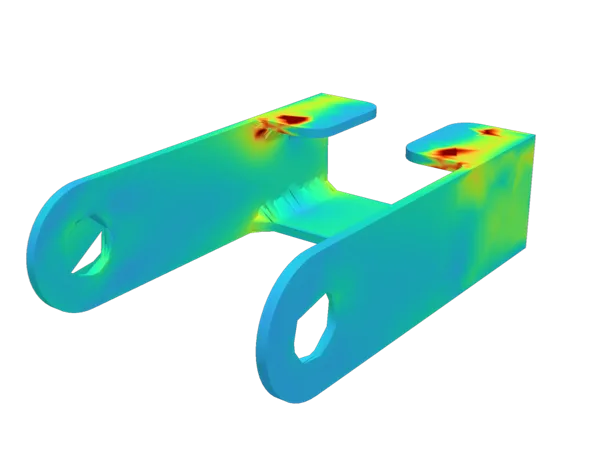
- Peak von Mises
- 52.6 MPa
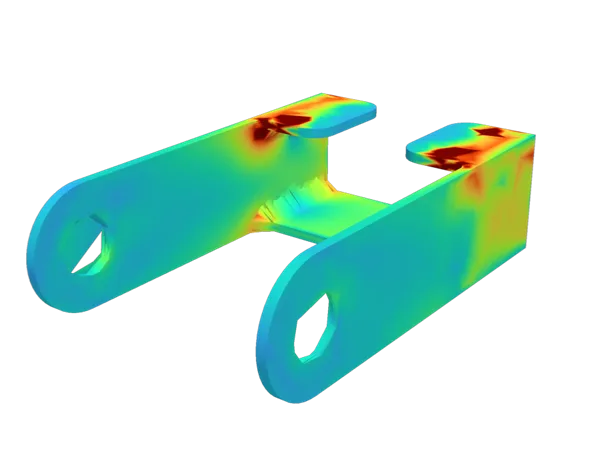
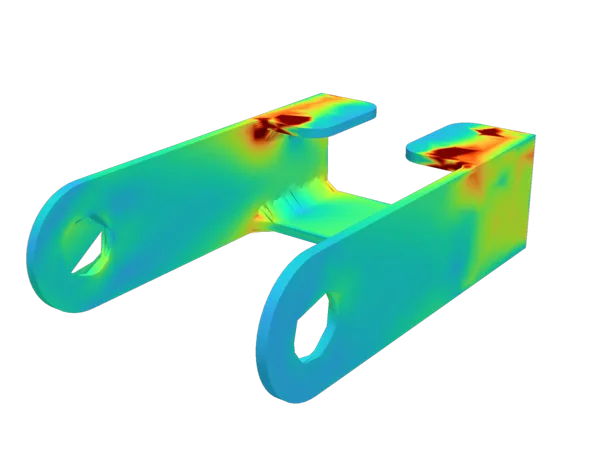
- Peak von Mises
- 52.6 MPa
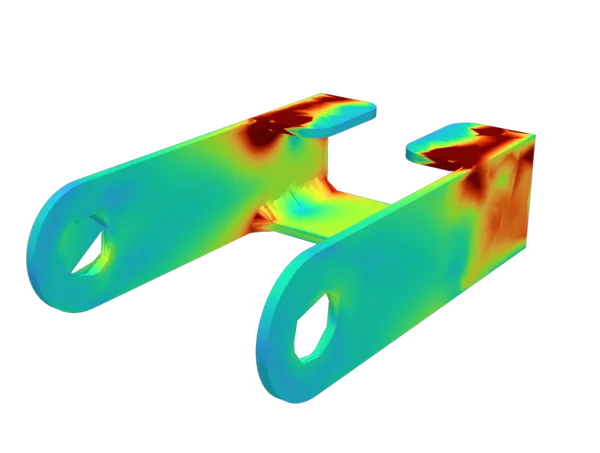
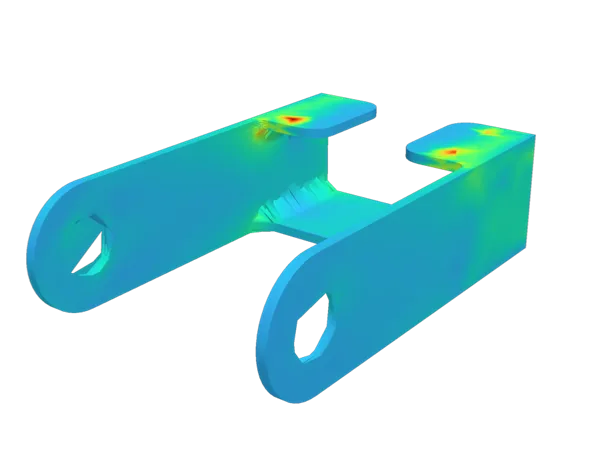
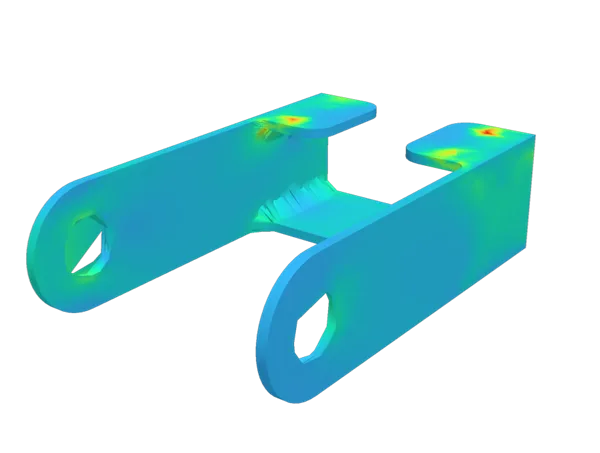
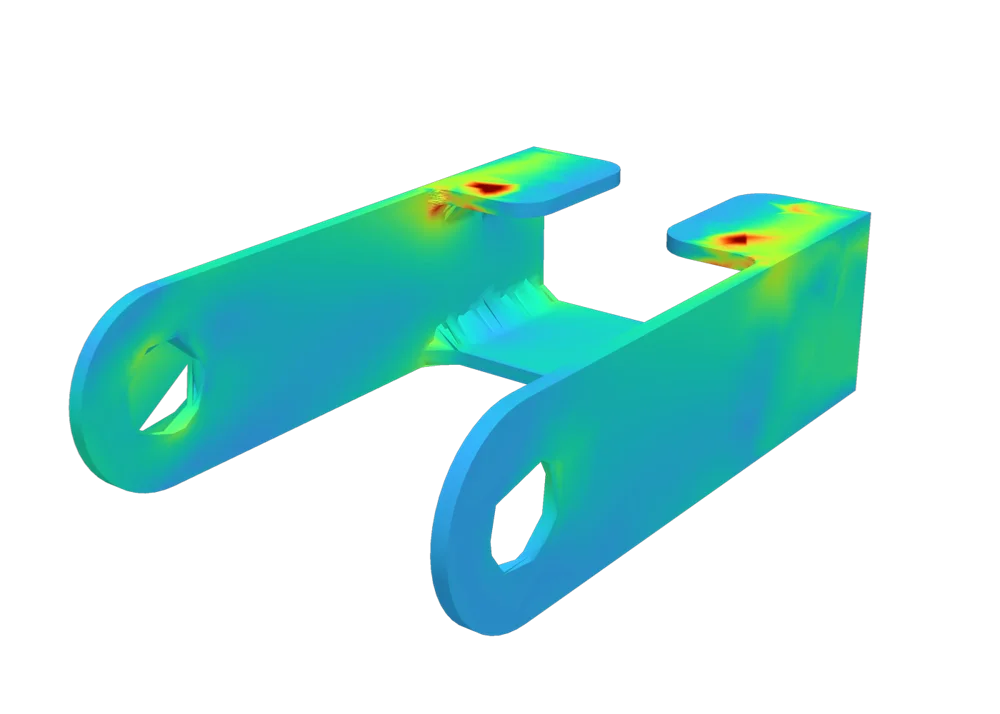
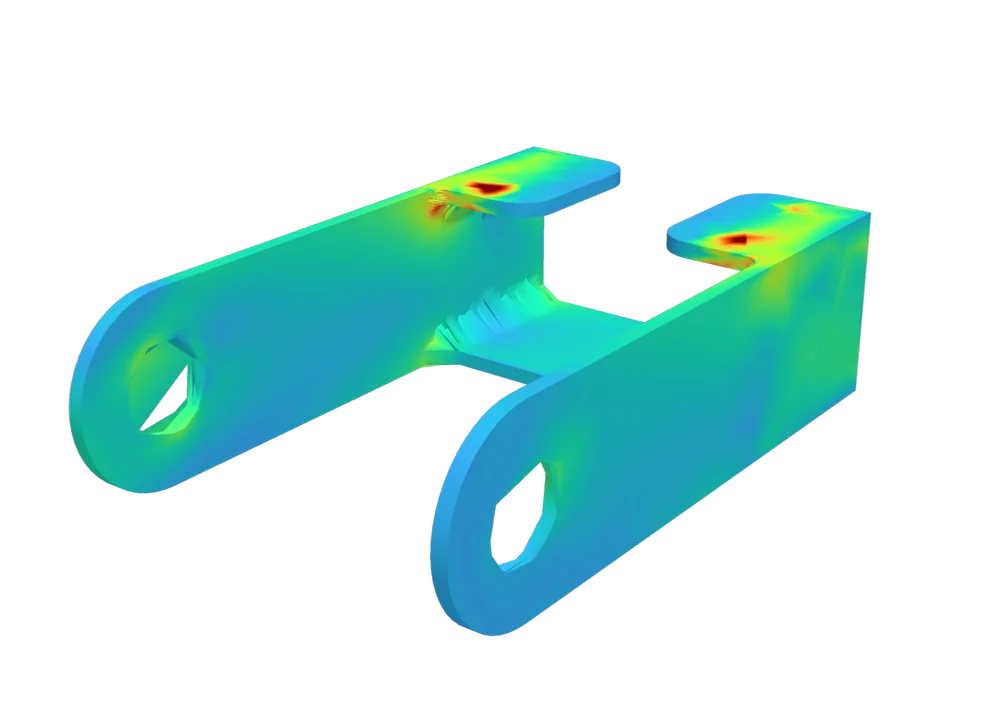
Load angle 67.5°, force 1000 N: a case the model never saw. Trained on the nine runs above. Same colour scale.
Demo
Nine bracket runs in, a new load case out.
Screen recording on a CPU. Training sped up as marked; prediction in real time.
What's different
Structure you can read, not just weights.
| Aspect | Typical neural surrogate | Invariant Physics |
|---|---|---|
| What it learns | Weights that map inputs to fields | Dimensionless groups, symmetries, equations and laws you can read |
| Runs needed | Typically 30 to several hundred | Tens: 9 for the bracket, 18 for a wafer film |
| Training hardware | GPUs | A laptop CPU |
| Outside the training range | Accuracy usually falls off | Follows the law it found where one holds, and flags every case outside |
| What comes with an answer | A number | The method used, the error it was tested at, and where it holds |
Training happens on an ordinary CPU, so simulation data never has to leave the company. No GPU cluster, no upload.
Results
Measured on cases it never saw.
unseen airfoils predicted closer than the nearest simulation
AirfRANS public dataset, velocityerror 10× beyond the training range, against 35% for standard interpolation
Controlled boundary-layer benchmarkpublic CFD and heat-transfer datasets, same default settings
Plus 20 COMSOL studies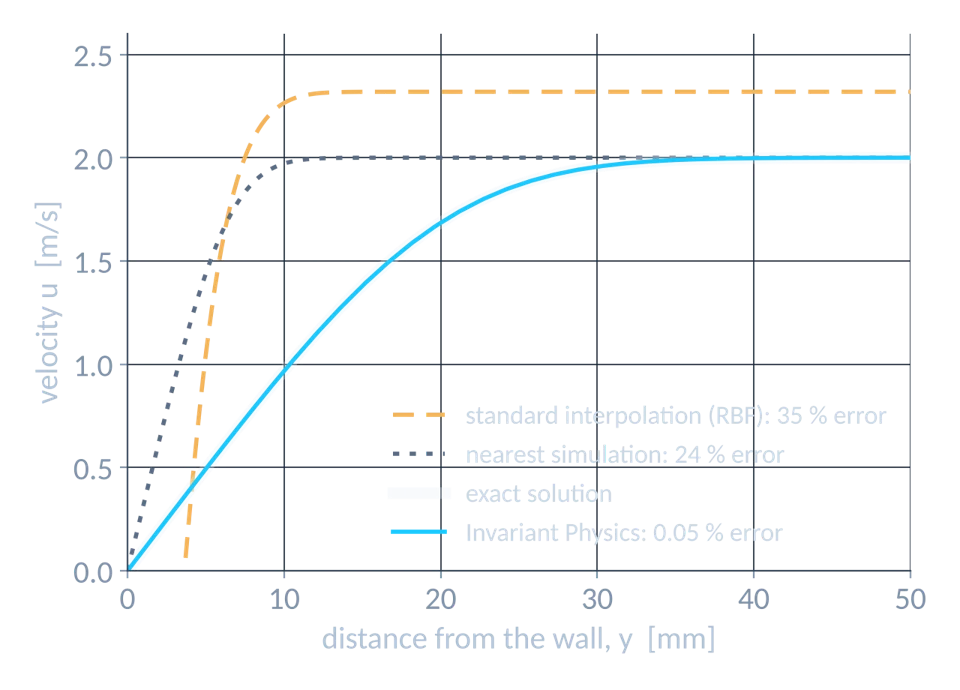
Tested across the physics engineers simulate
- FluidsCylinder wake, airfoils, pump, static mixer, turbulent channel
- Heat transferHeat sink, heat exchanger, turbine stator, battery pack
- StructuresLoaded bracket, piezoelectric micropump, elastoplastic plate
- ElectromagneticsPermanent-magnet motor, eddy currents, induction heating
- PlasmaReference cell, argon discharge
- ChemistryTubular reactor, Li-ion battery cell
Tested is not solved. Accuracy varies by problem, and some cases still fail. We report those too.
Who it's for
Teams where a wrong answer means a recall or a failed certification.
- SemiconductorsPlasma etch and deposition, thin films, chip and package heat
- Automotive and EVStructural loads, aerodynamics, electric motors, battery cooling
- Aerospace and defenceExternal aerodynamics, turbine cooling, brackets and frames
- Energy and processHeat exchangers, pumps, mixers, reactors
- ElectronicsThermal management, MEMS and micro-pumps, induction
Early access
We're working with a small number of engineering teams.
If you have a design question and a folder of simulation runs, we'd like to hear about it. Tell us what you simulate, which solver you use, and roughly how many runs you have.